How to Choose the Right Banding Tape for Your Packaging Needs
In the packaging industry, the choice of materials plays a pivotal role in ensuring product integrity and visibility during transportation and storage. Among these materials, banding tape has emerged as a critical component for various packaging applications, hailed for its ability to secure products efficiently while maintaining an organized appearance. According to the latest market reports from the Packaging Strategies Association, the demand for banding tape has been steadily increasing, driven by the growth of e-commerce and retail, where presentation and security of products are paramount.
Selecting the right banding tape is essential not only for durability but also for aligning with specific packaging needs which can vary significantly across different industries. Technical specifications such as tensile strength, adhesive properties, and material composition must be carefully evaluated. Recent studies indicate that more than 65% of companies have reported significant cost savings and improvements in packaging efficiency after optimizing their selection of banding tape. As businesses continue to prioritize sustainable and functional solutions, understanding the diverse options available in banding tape can provide a competitive edge in the constantly evolving market landscape.
Understanding Different Types of Banding Tape Available on the Market
When selecting the appropriate banding tape for packaging, it's essential to understand the various types available in the market. Banding tapes are commonly classified into several categories, each with unique properties and applications. The most popular types include polypropylene, polyester, and paper banding tapes, each offering a distinct balance of strength, flexibility, and adherence.
Polypropylene banding tape is known for its excellent resistance to moisture and chemicals, making it suitable for outdoor applications and industries such as agriculture and construction. According to a 2022 market analysis by Smithers Pira, polypropylene accounted for approximately 45% of all banding tape sales worldwide, highlighting its popularity due to its durability and cost-effectiveness. On the other hand, polyester banding tape offers superior tensile strength and is often used in heavy-duty applications, such as securing large and heavy packages. This type of tape has been gaining traction, especially in the logistics and shipping sectors, where high performance is critical.
Paper banding tape, while less robust than its plastic counterparts, provides an eco-friendly option, appealing to companies focusing on sustainability. Research conducted by the Freedonia Group in 2023 showed a growing trend towards paper-based products, predicting a 15% yearly growth in demand as businesses aim to reduce their environmental footprint. Understanding these distinctions is crucial for businesses looking to optimize their packaging solutions while catering to specific operational needs and sustainability goals.
Understanding Different Types of Banding Tape
Evaluating Banding Tape Strength for Your Packaging Requirements
When evaluating banding tape strength for your packaging requirements, one of the primary considerations is the tensile strength of the tape. Tensile strength, measured in pounds per inch (PLI), indicates the maximum load the tape can bear before breaking. According to market research conducted by Smithers Pira, the global demand for packaging materials that include banding tape is expected to grow significantly, emphasizing the importance of selecting the right type for various applications. For instance, a tape with a tensile strength of 600 PLI is generally suitable for heavy-duty industrial applications, whereas lighter applications may only require tape with a tensile strength of around 300 PLI.
Another key factor is the puncture resistance of the banding tape. This property determines how well the tape can withstand sharp edges and rough surfaces without losing its integrity. Industry standards suggest that for packaging items with irregular shapes or sharp corners, investing in banding tape with high puncture resistance is crucial. Reports from the Flexible Packaging Association indicate that packaging materials optimizing strength and durability often result in reduced product damage during transportation, leading to overall cost savings and increased sustainability for businesses. In this context, choosing a banding tape that meets both tensile and puncture resistance requirements will ensure that packaged goods are secured effectively, enhancing protection throughout the supply chain.
How to Choose the Right Banding Tape for Your Packaging Needs
| Tape Type |
Material |
Strength (lbs) |
Width (inches) |
Recommended Use |
| Polypropylene |
Plastic |
60 |
1 |
General Packaging |
| Polyester |
Plastic |
75 |
1.5 |
Heavy-Duty Packaging |
| Plastic Strapping |
Polyethylene |
90 |
0.5 |
Bundling & Palletizing |
| Corded Strapping |
Polyester |
100 |
1 |
High-Strength Applications |
| Woven Strapping |
Polyester |
120 |
1.25 |
Cargo & Freight |
Assessing Adhesive Properties of Banding Tapes for Effective Sealing
When selecting banding tape for packaging, assessing the adhesive properties is crucial for achieving effective sealing. Adhesive strength, elasticity, and resistance to environmental factors all play vital roles in determining the suitability of a tape for various applications. According to recent industry reports, approximately 25% of packaging failures can be traced back to inadequate sealing caused by inferior adhesive performance. Consequently, understanding the composition and properties of different adhesive types is essential for making informed choices.
Tips: Always test the adhesive in real-world conditions. Conduct peel adhesion tests under varying temperatures and humidity levels to ensure the tape performs well in your specific environment. Additionally, check for the tape's transparency if aesthetic presentation is a consideration; some applications can punish opaque materials.
Moreover, consider the tape's compatibility with the packaging materials being used. For instance, certain adhesives adhere better to plastic than to fabric or cardboard. Reports suggest that about 30% of packaging companies encounter issues because their tape choice was not suitable for the substrate. It is important to conduct adhesion testing with the actual materials before final selection.
By focusing on these adhesive properties and conducting thorough tests, businesses can significantly improve their packaging quality and reduce costly mistakes caused by improper sealing methods.
Considering Environmental Factors in Choosing Banding Tape
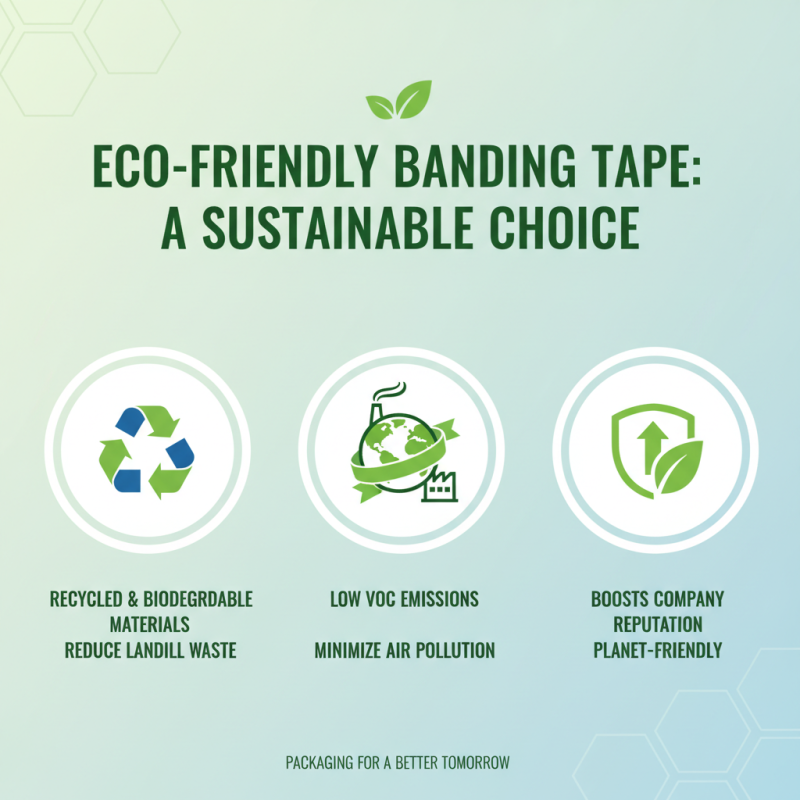
When selecting the right banding tape for packaging, considering environmental factors is essential. The packaging industry is increasingly focusing on sustainability; thus, using eco-friendly materials not only benefits the planet but can also enhance a company's reputation. Look for banding tapes made from recycled or biodegradable materials, which help reduce landfill waste. Additionally, opting for tapes manufactured with low VOC (volatile organic compounds) emissions supports efforts to minimize air pollution and contributes to a healthier working environment.
Another important aspect to consider is the lifecycle of the banding tape. Assess its durability and performance to ensure it meets your packaging needs without requiring frequent replacements, thus reducing resource consumption. Moreover, consider how the tape will be disposed of after use. Choosing options that can be recycled alongside the packaging can simplify the disposal process and promote a circular economy. By prioritizing these environmental factors, businesses can not only meet regulatory requirements but also appeal to environmentally conscious consumers.
Cost-Effectiveness: Analyzing Pricing and Performance of Banding Tapes
When selecting the right banding tape for your packaging needs, analyzing the cost-effectiveness of various options can significantly impact your bottom line. Pricing often varies between different types of banding tapes, which can be made from materials such as polypropylene or polyester. It's essential to evaluate not only the initial purchase price but also the performance characteristics, such as tensile strength, durability, and resistance to moisture and UV light. These factors contribute to the overall efficiency and reliability of your packaging.
Tips: Before making a purchase, calculate the total cost of ownership by considering how long the tape lasts in real-world applications. A higher-priced tape with superior performance may save money in the long run by reducing waste and improving shipping efficiency. Additionally, consider conducting a side-by-side comparison of different tapes under similar conditions to gauge their performance and longevity.
Moreover, analyze your specific packaging requirements and the environment in which your products will be stored and transported. This can help you make a more informed choice about which tape will best meet your needs while staying within budget. Keep in mind that sometimes the most affordable option may not provide the best value if it compromises the integrity of your packaged goods.