
How to Choose a Chocopie Cake Production Line?
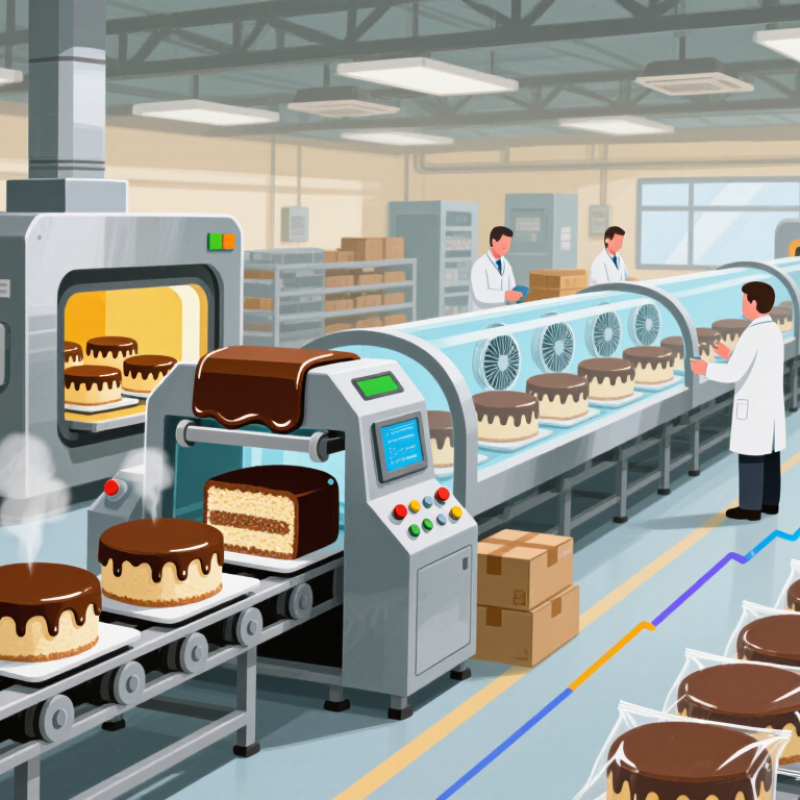
Choosing a Chocopie Cake Production Line requires more than comparing machine prices. It demands a clear view of product quality, factory space, labor, hygiene, and future demand. A Chocopie typically combines a soft baked shell, stable filling, chocolate coating, cooling, and protective packaging. Each stage can affect texture, appearance, shelf life, and production waste.
According to Grand View Research, the global bakery products market was valued at approximately USD 594 billion in 2023. The report also expects continued growth through 2030, driven by convenience foods and packaged snacks. This trend creates opportunities, but it also raises equipment expectations. PMMI industry reports emphasize automation, flexible packaging, and improved production efficiency as major priorities for food manufacturers. These findings suggest that a suitable Chocopie Cake Production Line should offer accurate depositing, consistent baking, controlled enrobing, and reliable packaging integration.
Look closely at the details.
Check the line’s hourly output against realistic orders, not optimistic brochures. Ask how quickly operators can change molds, fillings, or package sizes. Inspect stainless-steel construction, cleaning access, temperature controls, and traceability functions. Energy consumption deserves attention too, especially in ovens, cooling tunnels, and compressors. Some suppliers provide impressive specifications, yet service response may be unclear. That weakness can become expensive during peak production. Buyers should request sample testing, factory references, acceptance criteria, and total ownership costs before signing. The ideal Chocopie Cake Production Line is not always the largest or fastest option. It is the line that delivers repeatable quality, safe operation, maintainable performance, and room for thoughtful improvement.
Define the Chocopie Cake Specifications and Production Goals
Before choosing a Chocopie cake production line, define the product precisely. Record cake diameter, thickness, filling weight, coating type, and target piece weight. A practical starting specification could be a 45-gram cake with a 10-gram cream center and a 2-millimeter chocolate coating. Small variations matter. They affect cooling time, packaging accuracy, and breakage rates.
Set measurable production goals. For example, target 3,000 pieces per hour, 98% weight compliance, and less than 2% coating defects. Grand View Research estimated the global bakery products market at about USD 594 billion in 2023. This scale increases pressure on manufacturers to improve consistency, not merely speed. Your line should match expected demand, labor availability, factory space, and future product variations. A large line can become an expensive underused asset.
Food safety goals need equal attention. Specify allergen controls, sanitation time, temperature records, and traceability requirements before equipment selection. HACCP-based planning can identify risks around cream filling and chocolate cooling. Our first production trial may still expose uneven filling or soft edges. That is useful evidence, not failure. Recheck the recipe, deposit accuracy, cooling airflow, and belt speed. A short pilot run often reveals more than a polished equipment brochure. Leave room for adjustment.
How to Choose a Chocopie Cake Production Line?
Define the Chocopie Cake Specifications and Production Goals
Use the target cake weight and required line speed to estimate hourly production capacity before selecting equipment. The scenarios below show how product specifications influence output requirements.
Map the Production Process from Mixing to Packaging
How to Choose a Chocopie Cake Production Line?
Map the production process from mixing to packaging before comparing equipment. A reliable line should handle flour, cocoa, eggs, sugar, and emulsifiers with controlled dosing. The mixing system needs stable speed and temperature control. Small changes can affect batter viscosity and cake volume. In trial production, operators should record mixing time, density, and moisture after baking.
The forming stage must match the product’s size and filling design. Depositors should deliver consistent portions without damaging the soft cake sheet. After baking, cooling must be gradual. Warm cakes can weaken the filling layer and create condensation inside the package. A 2024 report from Mordor Intelligence estimates steady growth in the global cakes market through 2029. That growth increases pressure for repeatable quality, not just higher output.
Packaging deserves equal attention. PMMI industry reports identify automation, flexible changeovers, and labor efficiency as major packaging priorities. Select a flow wrapper that controls seal temperature, film tension, and product spacing. Check whether the line supports metal detection, date coding, and inspection records. Packaging failures often appear after long production runs. A perfect factory test may not reveal them. Ask for extended trials using your actual recipe, film, and filling. The overlooked detail matters. Choose equipment that connects mixing, baking, cooling, filling, and packaging into one measurable process.
Calculate Required Capacity and Line Configuration
How to Choose a Chocopie Cake Production Line?
Calculate Required Capacity and Line Configuration
Choosing a Chocopie cake production line begins with measurable demand, not equipment size. Estimate daily sales, production days, and operating hours. For example, 120,000 cakes per day over 16 hours requires 7,500 cakes per hour. Add a realistic allowance for cleaning, changeovers, and minor stoppages. A practical target may be 9,000 cakes per hour, rather than the theoretical maximum.
Capacity must match the slowest process. Mixing, depositing, baking, cooling, filling, coating, and packaging should be reviewed separately. A conveyor may carry 10,000 pieces hourly, while the cooling tunnel handles only 8,000. That difference creates a bottleneck. Check oven length, baking temperature, cooling time, filling accuracy, and package format. Product size also matters. Larger cakes need wider spacing and longer cooling distances.
Keep quality controls inside the line configuration. Include metal detection, weight checks, temperature monitoring, and access for sanitation. Select servo-driven depositors when filling weight must remain consistent. Allow space for maintenance and future expansion. A 15% capacity reserve is often useful, but excessive capacity can increase energy and labor costs.
A perfect forecast is impossible.
Test a pilot batch before final selection. Measure actual waste, product deformation, cooling stability, and packaging speed. Initial calculations may look convincing, yet real production often exposes weak assumptions. Recheck the figures before signing the equipment specification.
Evaluate Equipment, Automation, and Quality Control
How to Choose a Chocopie Cake Production Line?
Evaluate Equipment, Automation, and Quality Control
A chocopie line should match your recipe, output target, and factory space. Start by checking the mixer, depositor, oven, cooling tunnel, cream applicator, enrober, and packing unit. Each machine must handle the cake’s moisture and filling consistency. In practice, small gaps between conveyors can damage soft cakes. Ask for test production using your actual ingredients.
Automation improves repeatability, but it does not replace skilled operators. Servo-driven depositors can control portion weight precisely. Temperature sensors help maintain stable baking conditions. A programmable control system should record alarms, speed changes, and recipe settings. Vision inspection can identify broken shells, missing cream, or uneven chocolate coating. Keep manual sampling points. They reveal problems that cameras may miss.
Quality control must continue from mixing to final packaging. Check batter density, cake thickness, filling weight, coating coverage, and seal strength. Install calibrated checkweighers and suitable metal detection equipment. Keep batch records with ingredient lots, oven temperatures, and inspection results. Sanitation access also matters; removable guards and washable surfaces reduce cleaning risks. During line evaluations, inspect changeover time and operator training, not only machine speed. Faster equipment can create more waste when settings are unclear. I have seen stable output improve after reducing conveyor speed slightly. That was not expected. Build in trial runs, maintenance checks, and honest review of rejected products.
Compare Supplier Support, Costs, and Expansion Options
When choosing a Chocopie cake production line, supplier support deserves the same attention as machine speed. The cheapest quotation may become expensive after installation. Request a detailed service scope before signing. It should cover commissioning, operator training, spare-parts availability, remote diagnostics, and response times. PMMI’s 2023 State of the Industry report valued U.S. packaging machinery shipments above 10 billion dollars in 2022. That figure shows how strongly manufacturers invest in automation and technical reliability. Ask the supplier for documented uptime, changeover records, and references from similar cake facilities. Sales promises are not performance data.
Compare total cost, not only the purchase price. Include utilities, molds, packaging materials, labor, maintenance, software licenses, and rejected products. A line producing 300 cakes per minute may waste more than a slower line if filling accuracy is unstable. Request a cost model using your recipe, package size, and working hours. The result will still contain assumptions. Review them openly. Expansion planning also matters. Check whether the conveyor frame, control system, and cooling tunnel can accept future modules. The 2024 World Robotics report recorded 541,302 industrial robot installations worldwide in 2023. This supports a modular automation strategy, but not every factory needs immediate robotics. Leave space for inspection cameras, secondary wrapping, or an additional depositor. Small details matter. A supplier unwilling to discuss upgrades may be optimizing today’s sale, not tomorrow’s production.