China Top 10 Wide Packing Tape Manufacturers?
China’s wide packing tape industry combines large-scale production with increasingly specialized engineering. This guide examines ten manufacturers serving export brands, logistics companies, wholesalers, and industrial users.
The phrase “top” needs careful handling. A factory may lead in volume but struggle with small custom orders. Another may offer excellent adhesive consistency but limited overseas support. Rankings therefore consider coating technology, film quality, production capacity, customization, testing, delivery reliability, and documented customer experience. Public information is uneven, so no list should be treated as permanent.
Dr. Jay Singh, a respected packaging professor and industry specialist, states, “Packaging performance must match the product, process, and distribution environment.” That principle guides this comparison. A carton crossing humid seas needs different tape from one moving through a dry warehouse. The adhesive must grip dusty kraft board. The polypropylene film should resist splitting during machine application. A clean 48-millimeter seal may be enough for ordinary cartons, while heavier boxes require wider or reinforced options.
This overview also considers practical details, including hot-melt and acrylic adhesives, low-noise unwinding, printed branding, recycled content, and production testing. Samples still matter. A polished brochure cannot reveal every weakness.
Some manufacturers may appear less impressive after direct testing. That is useful. Real performance often depends on carton surface, storage temperature, sealing pressure, and operator technique. Buyers should compare test reports, samples, certifications, lead times, and after-sales communication before making a decision. This article offers a structured starting point, not an unquestionable verdict.
What Is Wide Packing Tape and Where Is It Used?
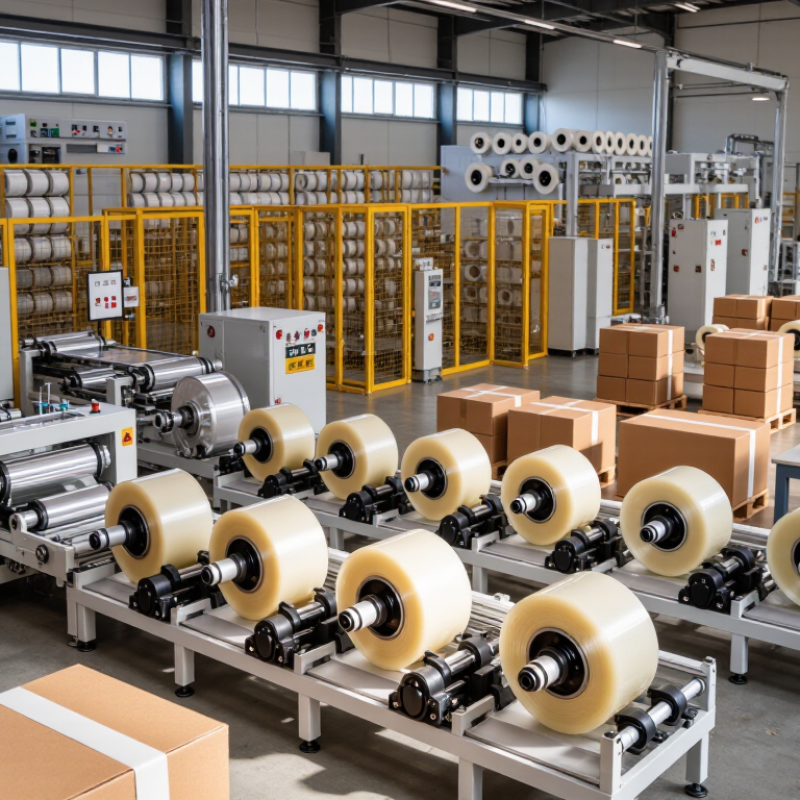
Wide packing tape is adhesive tape made with a broader film width than standard carton-sealing tape. Common widths range from about 75 to 100 millimeters, although specifications vary by supplier and application. Its backing is often polypropylene film, while the adhesive may be acrylic or hot-melt based. The wider surface spreads pressure across more carton area. This can improve sealing on large boxes, heavy parcels, and irregular package edges.
It is used in warehouses, export packing areas, moving operations, and manufacturing plants. Workers apply it with hand dispensers or carton-sealing machines. On a large corrugated box, wide tape can cover dusty flaps more effectively and reduce exposed gaps. It is also useful for bundling lightweight panels, protecting temporary labels, and reinforcing seams before pallet handling. It is not a replacement for stretch film or strapping. Each material has a different job.
A practical quality check should examine adhesion, tensile strength, unwind noise, and performance after temperature changes. Press a short strip onto corrugated board, then peel it slowly. If fibers lift, the bond may be strong, but the carton surface may be weak. That distinction matters. Some tapes look excellent in a clean office and fail in a cold loading bay. I have also seen overly wide tape waste material when the dispenser is poorly adjusted. Manufacturer selection should include sample testing, clear technical data, consistent coating, and traceable quality records. Small mistakes become expensive across thousands of cartons.
China Top 10 Wide Packing Tape Manufacturers? - What Is Wide Packing Tape and Where Is It Used?
Typical wide packing tape specifications and application guide. The figures below are general industry ranges and are not manufacturer- or brand-specific.
| No. | Tape Type | Common Backing Material | Typical Width | Typical Thickness | Adhesive Type | Main Packaging Uses | Key Performance Characteristics | Recommended Operating Range |
|---|---|---|---|---|---|---|---|---|
| 1 | General-purpose clear tape | Biaxially oriented polypropylene (BOPP) | 48–75 mm | 40–65 microns | Water-based acrylic | Carton sealing, warehouse packing, household moving boxes | Good transparency, balanced adhesion, economical for everyday use | Approximately 0°C to 60°C |
| 2 | Hot-melt packing tape | BOPP | 48–75 mm | 45–70 microns | Synthetic rubber hot melt | High-volume carton sealing and distribution packaging | High initial tack, fast bonding, suitable for automated packing lines | Approximately 10°C to 60°C |
| 3 | Solvent-acrylic tape | BOPP | 48–75 mm | 45–80 microns | Solvent-based acrylic | Long-term carton storage, export packaging, temperature-variable logistics | Stable aging performance, good shear resistance, reliable adhesion over time | Approximately -10°C to 80°C |
| 4 | Heavy-duty carton-sealing tape | Reinforced BOPP or thick BOPP | 60–100 mm | 70–100 microns | Hot-melt or acrylic | Heavy cartons, dense goods, palletized cases and industrial shipments | Higher tensile strength and improved resistance to splitting | Approximately 5°C to 70°C |
| 5 | Printed warning tape | BOPP | 48–75 mm | 45–65 microns | Water-based acrylic or hot melt | Security messages, handling instructions, promotional or identification packaging | Printed graphics improve package visibility and handling communication | Approximately 0°C to 60°C |
| 6 | Low-noise packing tape | BOPP | 48–75 mm | 45–65 microns | Modified acrylic or low-noise adhesive system | Retail stores, offices, fulfillment centers and noise-sensitive work areas | Reduced unwind sound while maintaining normal carton-sealing performance | Approximately 5°C to 60°C |
| 7 | Reinforced filament tape | Polypropylene film with fiberglass filaments | 25–75 mm | 100–150 microns | Pressure-sensitive synthetic rubber or acrylic | Bundling, strapping, pallet stabilization and securing heavy items | High tensile strength with strong resistance to lengthwise tearing | Approximately 5°C to 60°C |
| 8 | Double-sided wide tape | Polyester film, tissue or nonwoven carrier | 50–100 mm | 80–250 microns | Acrylic or rubber-based pressure-sensitive adhesive | Mounting inserts, attaching protective materials and temporary packaging fixtures | Adhesion on both sides; performance depends strongly on surface cleanliness | Approximately 10°C to 80°C |
| 9 | Paper-based packing tape | Crepe paper or kraft paper | 48–75 mm | 50–120 microns | Rubber-based or acrylic pressure-sensitive adhesive | Light cartons, paper packaging, gift packing and recyclable packaging systems | Writable surface and easy handling; may be easier to tear than film tape | Approximately 5°C to 50°C |
| 10 | Water-activated reinforced tape | Kraft paper with fiberglass reinforcement | 50–75 mm | 110–160 microns | Water-activated starch or dextrin adhesive | Heavy corrugated cartons, export cases and tamper-evident sealing | Bonds with the carton surface and can provide strong package integrity | Best applied in dry conditions at approximately 10°C to 40°C |
Note: Actual performance depends on adhesive formulation, film grade, carton quality, surface contamination, application pressure, storage conditions and sealing equipment. “Wide packing tape” commonly refers to carton-sealing tape wider than narrow utility tape, with widths often starting around 48 mm.
Related Posts
-
Top 10 Packing Tape Suppliers in China for Global Buyers?
-
2026 Top Industrial Packing Tape Buying Guide for Global Buyers?
-
China Top Industrial Packing Tape Suppliers for Global Buyers?
-
How to Choose the Best Packing Material Tape in 2026?
-
How to Choose the Best Packing Tape in 2026?
-

How to Use Wide Packing Tape Effectively in 2026?