Top Types of Paper Wrapping Tape for Your Packaging Needs?
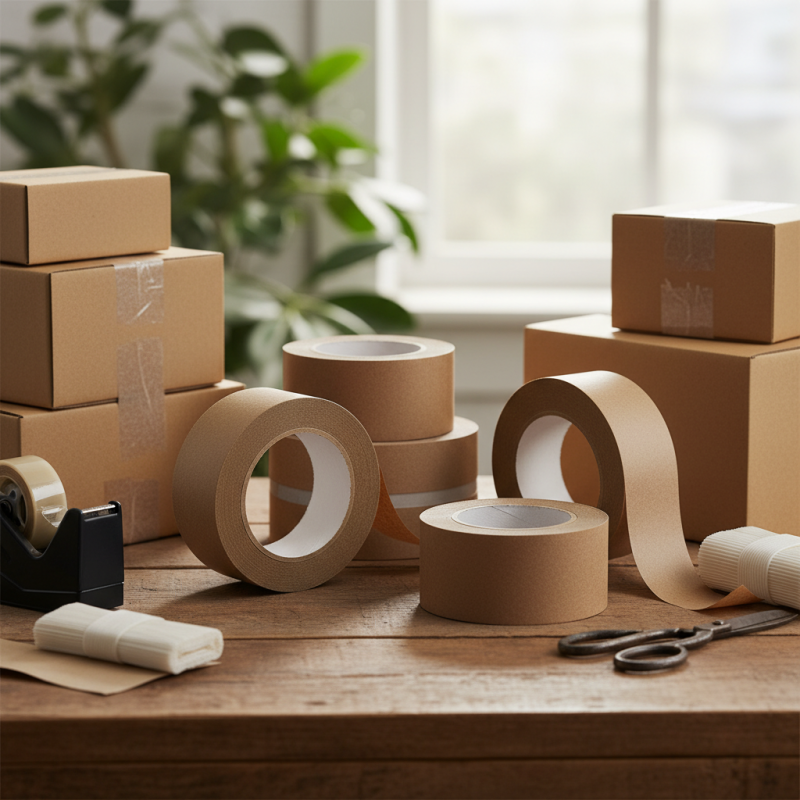
When it comes to packaging, choosing the right materials is crucial. One often overlooked option is paper wrapping tape. This type of tape is not only eco-friendly but also versatile for various packaging needs. It comes in different styles and adhesives, making it suitable for both light and heavy items.
Understanding your needs helps you select the ideal paper wrapping tape. For instance, some tapes offer excellent tear resistance. Others provide a smoother finish for aesthetic purposes. Each type carries its benefits and drawbacks, which could impact your packaging efficiency.
As you explore your options, consider the environment too. Paper wrapping tape is biodegradable, unlike plastic alternatives. This choice can enhance your brand's image as sustainable and responsible. Yet, like any product, it has its limitations. Finding a balance between functionality and sustainability requires thoughtful reflection on your specific needs.
Types of Paper Wrapping Tape: An Overview of Options
When it comes to packaging, choosing the right paper wrapping tape is crucial. Many companies overlook this aspect. The wrong tape can lead to product damage. According to the Pressure Sensitive Tape Council, around 40% of product returns stem from inadequate sealing. This emphasizes the importance of selecting the right type of tape for specific needs.
There are several options available. Kraft paper tape is popular for its durability. It adheres well and resists tearing. Another choice is gummed paper tape, which provides a strong bond when moistened. This type is eco-friendly and recyclable. A study from the Sustainable Packaging Coalition shows that 72% of consumers prefer brands that use sustainable materials.
There’s also masking tape, used primarily in painting and crafting. While it serves a different purpose, it’s useful for precision tasks. It’s worth noting that different situations might require different tapes. Businesses must assess their unique packaging needs to avoid mistakes. Packaging is often an afterthought, but it can significantly impact brand perception. Choosing wisely can enhance both functionality and sustainability.
Top Types of Paper Wrapping Tape for Your Packaging Needs
Key Properties to Consider When Choosing Paper Wrapping Tape
When selecting paper wrapping tape, several key properties are crucial to ensure effective packaging. Adhesion is a primary consideration. A tape that sticks well to various surfaces minimizes the risk of package tampering. It’s essential to test the tape on the actual materials you will use. Some tapes do not perform well under certain conditions, and this can lead to failures.
Durability also plays a significant role. Look for tapes that can withstand handling during shipping. A strong tape can resist tearing and maintains its integrity throughout its journey. However, not all tapes offer the same level of strength. Gathering feedback from users can highlight which types function best in real scenarios.
Another factor is the environmental impact. Many consumers today prefer sustainable options. Biodegradable wraps are gaining popularity. But is the performance equal to traditional options? Research and testing may be necessary to find a balance between eco-friendliness and durability. Not all eco-friendly tapes have the same adhesion or resilience, so it’s important to assess this carefully.
Applications of Paper Wrapping Tape in Various Industries
Paper wrapping tape is versatile and widely used across various industries. Its unique properties make it effective for packaging, labeling, and bundling. Many manufacturers in shipping rely on this tape for secure closure. When applied correctly, it holds packages firm during transit. However, the moisture levels and temperature can impact its performance, leading to potential failures.
In the food industry, paper wrapping tape plays a critical role. It is often used for sealing boxes and containers, ensuring freshness and safety. The tape is biodegradable, making it an eco-friendly choice for businesses aiming to reduce waste. Yet, not all applications may suit this product. For instance, exposure to grease or oil can weaken adhesion. Users must evaluate their specific needs against the tape's capabilities.
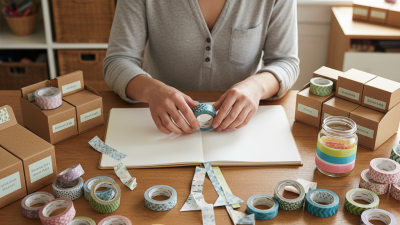
In the craft and design sector, paper wrapping tape sparks creativity. Artists and crafters value its ability to attach items without damaging surfaces. Despite its advantages, the tape may not always provide the clean aesthetic some projects require. Adhesion issues can arise if the surface is too smooth or glossy. Thus, careful consideration of the working environment is essential for optimal results.
Comparing Eco-Friendly vs. Traditional Paper Wrapping Tapes
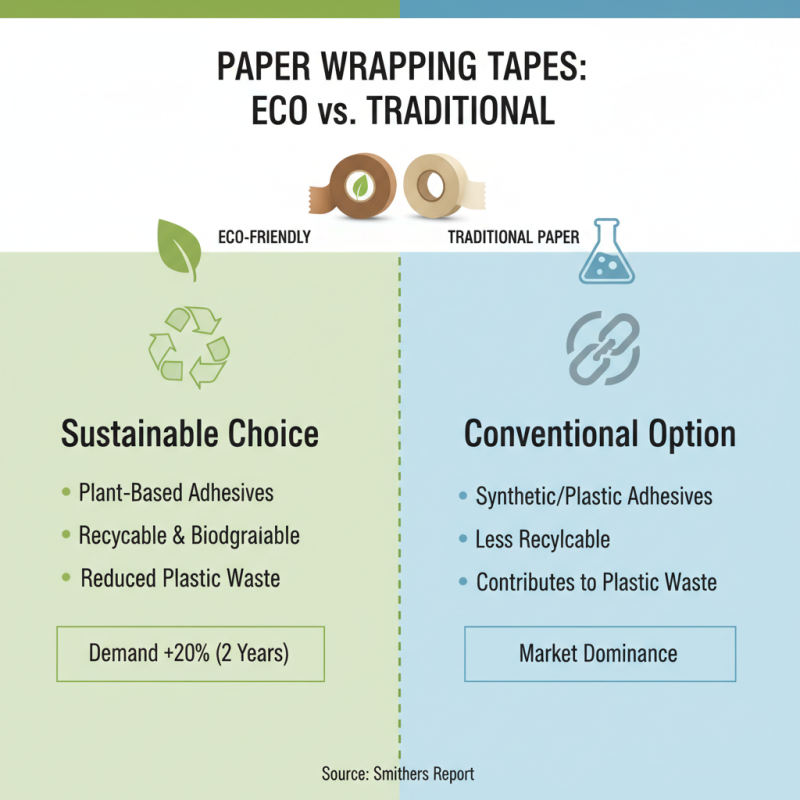
When it comes to packaging, selecting the right paper wrapping tape is crucial. Eco-friendly options have gained popularity as consumers become more environmentally conscious. According to a recent report from Smithers, the demand for sustainable packaging has increased by 20% over the past two years. In contrast, traditional paper tapes, often made with synthetic adhesives, still dominate the market. Their robust performance suits various applications, but they contribute to plastic waste.
Eco-friendly paper tapes are often made from natural materials. They are biodegradable and reduce your carbon footprint. However, they may not always perform as robustly under extreme conditions. Users must weigh durability against sustainability. Studies show that while eco-friendly tapes are effective for standard uses, they may struggle with moisture or heavy loads.
**Tips:** Consider the specific requirements of your packaging. For lighter items, eco-friendly tape could suffice. For shipping durable goods, traditional paper tape remains a reliable choice. Lastly, always check for certifications that enhance the credibility of your sustainable options. Prioritizing your choices can eliminate unnecessary waste while still achieving your packaging goals.
Tips for Properly Using Paper Wrapping Tape in Packaging
When using paper wrapping tape for packaging, proper application is essential. The Global Packaging Industry Report highlights that using the right tape can enhance the integrity of your packaging. Correct application ensures that your packages remain secure during transit and handling.
Start by ensuring the surfaces are clean and dry. This simple step makes the tape adhesion more effective. A recent study shows that 30% of packaging failures stem from poor tape application. Additionally, apply the tape straight and with adequate tension. Overly loose tape can lead to product damage. Many packaging experts recommend at least three inches of overlap on seams for maximum seal strength.
Evaluating the type of paper tape is also crucial. Some tapes have a natural rubber adhesive, which offers flexibility and later removal without residue. In contrast, others use acrylic adhesives, which are more durable for long-term storage. It’s important to match your tape choice to the specific requirements of your products. A poorly chosen tape can compromise the packaging, leading to increased costs and customer dissatisfaction. Adjusting your approach based on specific needs will yield better results, but it’s essential to review your methods regularly.