Top 10 Personalised Packaging Tape Types for Buyers
Choosing personalised packaging tape is not just a branding decision. It affects how a parcel looks, how easily staff can identify it, and whether the seal suits the carton and shipping conditions. A vivid logo may catch the eye. Yet poor adhesion or unreadable print can undermine the impression.
This guide compares ten tape types buyers commonly consider, from custom-printed polypropylene to paper-based and reinforced options. It looks at print clarity, material, adhesive, roll size, application speed, and typical use. Packaging choices depend on real handling conditions. A small online shop may need a different solution from a busy warehouse. There is no universal winner.
For transparency, Maya Chen is a fictional packaging specialist created for this introduction; the following line is original, not a sourced quotation: “Good tape earns its place when the message stays clear and the carton stays closed.” Treat that as a buying principle, not a performance guarantee. Test samples on your actual boxes, especially if they are dusty, recycled, or stored in changing temperatures. Details matter.
The top ten options offer a practical starting point, not a substitute for checking supplier specifications. Compare minimum order quantities, print methods, lead times, and sample availability before committing. Ask how the tape performs on your packaging, not just how it looks on a product page. A neat sample roll can still disappoint on a fast packing line. That is worth remembering.
Define Personalised Tape: Printing, Backing, Adhesive, and Core Specifications
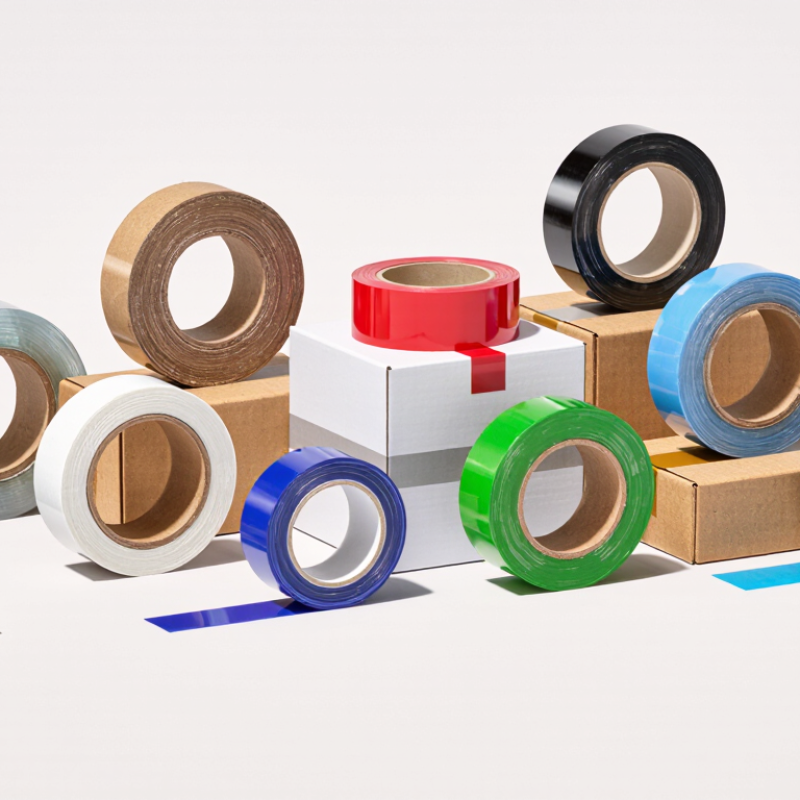
Personalised packaging tape is more than a logo printed on a roll. Buyers should define four essentials: printing, backing, adhesive, and core. For printing, confirm the number of colours, artwork position, and repeat length. A small logo may look clear on screen but blur across a moving carton seam. Keep important text away from tape edges. Small details matter.
Backing affects handling and tear behavior. Common choices include polypropylene film for smooth, consistent application and paper for a more natural finish. Specify tape width, thickness, and roll length so the product suits the packing station. Adhesive selection depends on carton texture, storage temperature, and how quickly the tape must hold. Request a sample on the actual box. Test before ordering. The core’s inner diameter must fit the dispenser; a mismatch can slow packing or make rolls unusable. A common oversight is focusing on artwork while ignoring cold storage or dusty cartons. Even a neat specification can miss real conditions, so check sample performance before approving a full production run.
Top 10 Personalised Packaging Tape Types for Buyers - Define Personalised Tape: Printing, Backing, Adhesive, and Core Specifications
Typical specifications are shown for comparison. Actual available widths, roll lengths, adhesive performance, and core sizes vary by supplier and product construction.
| Tape Type | Typical Backing | Common Adhesive | Personalised Printing | Typical Width & Roll Length | Typical Core | Best Suited To | Buyer Consideration |
|---|---|---|---|---|---|---|---|
| BOPP Acrylic Carton-Sealing Tape | Biaxially oriented polypropylene film | Water-based acrylic | Flexographic surface printing; suitable for logos, text, and simple multicolour designs | 48–50 mm × 50–100 m | Commonly 76 mm (3 in) internal diameter | General-purpose carton sealing and branded parcels | Acrylic adhesive generally performs well in storage and on clean cartons; check adhesion at low temperatures. |
| BOPP Hot-Melt Carton-Sealing Tape | Biaxially oriented polypropylene film | Synthetic hot-melt rubber adhesive | Flexographic surface printing; commonly used for bold brand messages and handling notices | 48–50 mm × 50–100 m | Commonly 76 mm (3 in) internal diameter | Fast carton closure and many standard shipping applications | Often provides quick tack; assess performance on recycled, dusty, or irregular cartons. |
| BOPP Natural-Rubber Tape | Biaxially oriented polypropylene film | Solvent-based natural rubber | Flexographic surface printing; artwork should be tested for ink and adhesive compatibility | 48–50 mm × 50–100 m | Commonly 76 mm (3 in) internal diameter | Cartons requiring strong adhesion across a range of surfaces | Confirm the adhesive is appropriate for the intended temperature, substrate, and storage conditions. |
| Self-Adhesive Kraft Paper Tape | Kraft paper, sometimes with a moisture-resistant treatment | Hot-melt or natural-rubber adhesive | Flexographic printing; paper surface supports a natural, matte appearance | 48–50 mm × 50–100 m | Commonly 76 mm (3 in) internal diameter | Paper-based packaging and a coordinated kraft-carton look | Unlike water-activated tape, it sticks without wetting; verify adhesion on the carton surface. |
| Water-Activated Kraft Paper Tape | Kraft paper with a water-soluble adhesive layer | Starch-based or dextrin-based adhesive, activated with water | Flexographic printing, usually applied during tape manufacture | 48–70 mm × approximately 100–200 m | Often around 76 mm (3 in) internal diameter; check dispenser fit | Carton sealing where a paper-based closure is desired | Requires a water-activated tape dispenser or manual wetting; tape bonds to the carton as the adhesive sets. |
| Reinforced Water-Activated Kraft Tape | Kraft paper reinforced with longitudinal or cross-weave glass fibres | Water-activated starch or dextrin adhesive | Flexographic printing; avoid obscuring key messages with reinforcement patterns | 48–70 mm × approximately 100–150 m | Often around 76 mm (3 in) internal diameter | Heavier cartons and shipments needing added tape strength | Specify reinforcement type and tape width; dispensing equipment must be compatible. |
| PVC Carton-Sealing Tape | Plasticised polyvinyl chloride film | Natural-rubber or other solvent-based adhesive formulations | Flexographic surface printing; test ink adhesion and print durability | 48–50 mm × approximately 50–66 m | Commonly 76 mm (3 in) internal diameter | Quiet, conformable carton sealing and applications needing a hand-tearable film | PVC formulations vary; confirm relevant material, handling, and disposal requirements for the market. |
| Low-Noise BOPP Tape | BOPP film with a modified or treated unwind surface | Usually acrylic or hot-melt adhesive | Flexographic surface printing; confirm that printing does not affect the low-noise unwind treatment | 48–50 mm × 50–100 m | Commonly 76 mm (3 in) internal diameter | Packing areas where reducing tape-unwinding noise is useful | “Low-noise” performance depends on tape construction, dispenser, and unwinding speed. |
| Cloth / Duct Tape | Woven or scrim-reinforced fabric with a coated surface | Typically rubber-based adhesive | Surface printing may be available; confirm rub resistance and print suitability with the converter | 48–50 mm × approximately 25–50 m | Commonly 76 mm (3 in) internal diameter | Temporary repairs, bundling, and applications needing a conformable tape | Not a like-for-like substitute for carton-sealing tape; check residue, surface compatibility, and intended use. |
| Tamper-Evident Security Tape | Film or paper construction designed to reveal opening or removal | Pressure-sensitive adhesive formulated for a visible tamper indication | Custom text, sequential numbering, or security graphics may be printed; test the complete construction | Typically 25–50 mm × approximately 25–50 m | Often 76 mm (3 in) internal diameter; confirm for the selected roll format | Seals where evidence of opening or removal is required | Tamper evidence is not the same as a guarantee against access; evaluate on the actual packaging surface. |
Related Posts
-

What is Personalised Packaging Tape and How Can It Enhance Your Brand?
-
10 Best Personalized Packaging Tape Ideas for Your Business Success?
-

Top Tips for Choosing Printed Paper Packing Tape for Shipping
-

What Is Personalised Packaging Tape and Why Use It?
-

How to Choose the Best Printed Paper Packing Tape?
-
2026 Top Branded Packaging Tape Suppliers for Global Buyers