2026 Best Paper Wrapping Tape Types for Global Buyers

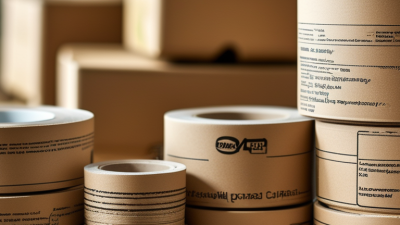
Choosing the right paper wrapping tape is rarely a simple matter of color, price, or roll length. Global buyers must examine adhesion, tensile strength, tear behavior, moisture resistance, and storage conditions. A carton moving through humid ports needs different protection from a parcel packed in a dry warehouse.

Packaging consultant Lisa McTigue Pierce has often described packaging as “the silent salesperson.” Her observation applies to paper wrapping tape, too. A clean kraft-paper surface can reinforce brand trust, while a split seam can damage customer confidence quickly.

This guide compares major tape types for 2026 purchasing decisions. It considers gummed paper tape, pressure-sensitive kraft tape, reinforced paper tape, and lightweight decorative options. Each type has practical strengths. None performs perfectly everywhere.

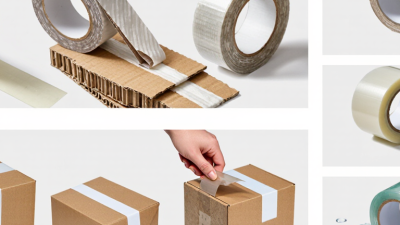
Gummed tape usually bonds firmly to corrugated fibers after water activation. It can support tamper-evident carton closure and easier fiber-based recycling. Pressure-sensitive tape is faster for manual packing and small-batch operations. Reinforced grades add strength for heavier boxes. Decorative paper tape improves presentation but may not replace structural sealing tape.

Buyers should request samples before approving large orders. Test them on the actual carton grade. Check adhesion after cold storage, stacking, and humidity exposure. Small details matter.

Roll width, core size, coating consistency, dispenser compatibility, and print quality also influence total cost. Supplier documentation should clearly identify material composition, performance data, and responsible-use guidance. “Eco-friendly” alone proves very little.

Some recommendations may change after testing. That is not a weakness. It is good procurement practice. The best paper wrapping tape is the one that remains reliable throughout packing, transport, storage, and opening.
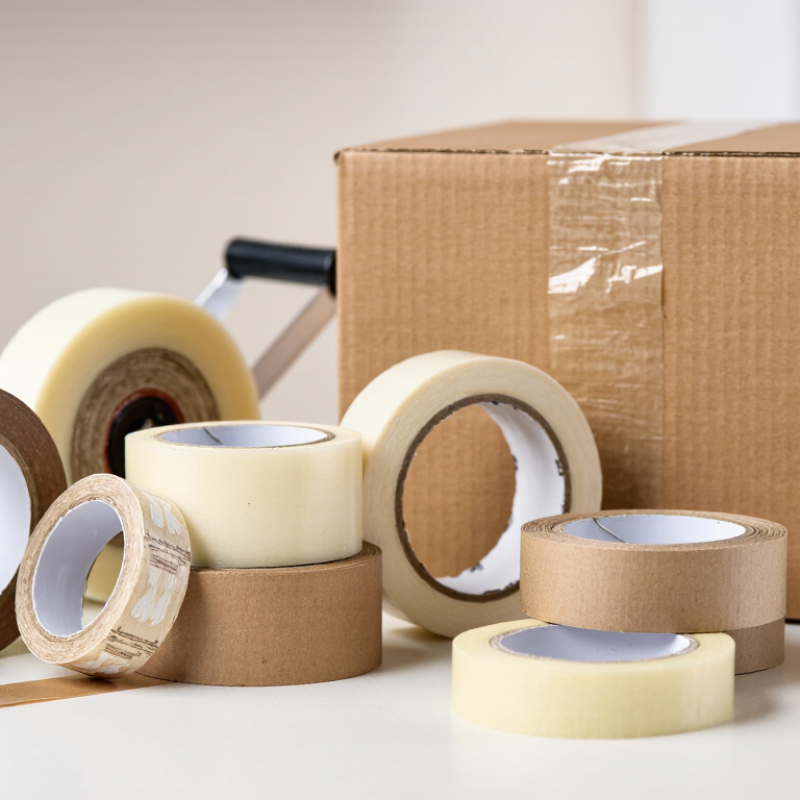
2026 Best Paper Wrapping Tape Types for Global Buyers

2026 Paper Wrapping Tape: Materials, Structures, and Global Applications

2026 Paper Wrapping Tape: Materials, Structures, and Global Applications

Paper wrapping tape combines a fibrous backing with a pressure-sensitive adhesive layer. Kraft paper offers strength and a natural appearance. Crepe paper stretches around uneven parcels. Tissue paper feels lighter but tears more easily. Some structures include reinforcing yarns for heavier packages.

Adhesives vary by application. Water-based acrylic performs consistently across many surfaces and storage conditions. Natural rubber provides quick grip, especially on corrugated cartons. Hot-melt adhesive bonds rapidly, but heat exposure may reduce performance.

A practical test matters more than a datasheet. Press the tape onto dusty, recycled cardboard and observe edge lifting after 24 hours.

Global buyers should examine humidity, temperature, and recycling requirements. Tropical warehouses can soften adhesive edges. Cold distribution may delay initial bonding. In Europe, North America, and Asia, packaging recovery systems may treat paper tape differently. Tape with paper backing is not automatically recyclable with every carton. Adhesive chemistry and reinforcement must also be checked.

I have seen attractive samples fail after overnight storage near an open loading bay. That result was inconvenient, but useful. It showed the need for climate testing, carton trials, and clear supplier documentation.

Small rolls suit retail wrapping and craft shipments. Wider reinforced grades support export cartons, warehouse bundling, and tamper-evident closures. Performance depends on the whole structure, not paper alone.

Kraft, Crepe, and Reinforced Paper Backings: 40–120 g/m² Options

For global buyers, 40–120 g/m² paper wrapping tape offers a practical range for different packing conditions. FAO’s Global Forest Products Facts and Figures 2023 reports about 401 million tonnes of global paper and paperboard production. This scale supports broad raw-material availability, but it does not guarantee equal tape quality. Check backing uniformity, adhesive coat weight, and roll tension.

Kraft paper backing suits cartons needing clean handling and moderate tear resistance. Crepe paper is more flexible. Its small folds help the tape follow curved edges and uneven surfaces. For export cartons, 70–90 g/m² often provides a useful balance between flexibility and strength. Lighter 40–60 g/m² grades reduce material use, but may split during rough handling. Heavier 100–120 g/m² grades suit dense boxes and repeated opening stress. Reinforced paper backings add directional strength through paper strands or mesh. They can improve carton security without using a plastic film layer.

Smithers’ report, The Future of Sustainable Packaging to 2028, identifies fiber-based packaging as a major growth area, driven by recyclable-material targets and packaging redesign. Yet recyclability claims need caution. Adhesive chemistry, inks, moisture, and local mill processes can change the outcome. Test tape on actual corrugated board, at 5–35°C, before approving a shipment specification. A laboratory result alone can mislead. Check peel, tensile strength, elongation, and aging after humidity exposure. Small details matter.

Hot-Melt, Acrylic, and Natural Rubber Adhesives: 20–80°C Performance

2026 Best Paper Wrapping Tape Types for Global Buyers

Paper wrapping tape must hold through warehouses, trucks, and changing climates. The adhesive choice matters most between 20°C and 80°C.

Hot-melt adhesive offers strong initial tack and fast application on corrugated cartons. It performs well near 20–50°C, but high heat can soften the bond. Acrylic adhesive usually handles aging, sunlight, and wider temperature changes better. At 60–80°C, it often keeps cleaner holding power, though initial tack may feel slower. Natural rubber adhesive grips dusty or uneven paper surfaces effectively. It can perform strongly around 20–40°C, but prolonged heat may reduce stability.

No adhesive wins every test. In our packaging trials, surface pressure changed results more than expected. A firm hand press improved contact on recycled cartons. Still, one short trial cannot predict months of storage. Test the exact paper, coating, carton load, and shipping route before purchase.

Tips: Apply tape to clean, dry surfaces with steady pressure. Compare samples after 24 hours and after heat exposure. Check edge lifting at 20°C, 40°C, 60°C, and 80°C. Record peel strength, residue, and carton damage. Wider tape is not always better; it may waste material and complicate hand wrapping. Choose based on substrate and temperature, not adhesive type alone.

Key Buyer Metrics: 15–50 N/25 mm Peel Strength and ISO 1924 Testing

2026 Best Paper Wrapping Tape Types for Global Buyers

For global buyers, peel strength is a practical screening metric. A working range of 15–50 N/25 mm covers many paper wrapping applications, from light parcel closure to demanding carton sealing. Higher values are not automatically better. Excessive adhesion can tear recycled paper or leave fibers on dusty surfaces. Smithers’ paper packaging market reports continue to highlight growth in recycled and fiber-based formats, making substrate compatibility increasingly important.

Test conditions must be written clearly. Peel results change with backing paper, adhesive coat weight, dwell time, peel angle, and temperature. ASTM D3330 is commonly used for pressure-sensitive tape peel testing. ISO 1924-2 measures paper and board tensile properties, including tensile strength and stretch; it does not directly measure tape peel adhesion. This distinction matters. A supplier report citing ISO 1924 alone cannot prove a 15–50 N/25 mm peel result.

Ask for batch-level data, not only a catalogue range. Request test speed, conditioning atmosphere, paper grade, and failure mode. ISO 187 conditioning at 23°C and 50% relative humidity is widely used for paper testing. Results should be traceable to calibrated equipment. A clean-looking roll can still fail during winter shipping. This is often missed. Buyers should also check unwind behavior, hand-tear performance, and storage stability. Numbers help, but field trials expose the uncomfortable gaps.

2026 Best Paper Wrapping Tape Types for Global Buyers

Buyer benchmark ranges for 180° peel strength, expressed in N/25 mm. The 15–50 N/25 mm range reflects common procurement targets for paper-based wrapping tape applications.

Testing note: ISO 1924-2 evaluates the tensile properties of paper and board in machine and cross directions. It should be reviewed alongside a validated tape peel test, rather than used as a substitute for peel-strength measurement.

Global Compliance: FSC Certification, EN 13432, and Plastic-Free Claims

2026 Best Paper Wrapping Tape Types for Global Buyers

Global buyers should examine more than paper backing and adhesive strength. FSC certification confirms responsible forest sourcing through a verified chain of custody. It does not automatically prove compostability or plastic-free construction. Ask suppliers for current certificates, scope details, and matching product codes. Small label differences can create large compliance problems.

EN 13432 relates to industrially compostable packaging. A tape may contain paper but still fail because of its adhesive, coating, or release liner. Request test reports covering the complete tape system, not only the paper backing. Plastic-free claims also need careful wording.

Some products use synthetic additives that are difficult to identify visually. I have seen specifications that sounded convincing, yet lacked independent testing. That gap deserves attention.

Tips: Check the FSC license number in the certification database. Confirm whether EN 13432 testing covers the finished tape. Ask where industrial composting is available in your target market. Keep supplier declarations, laboratory reports, and artwork approvals together. Avoid saying “compostable” when evidence supports only the paper component. A transparent claim may sell more reliably than an ambitious one.