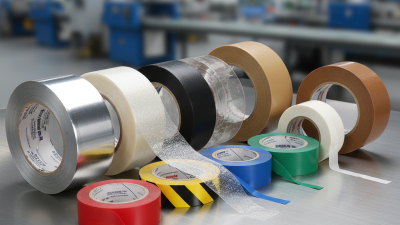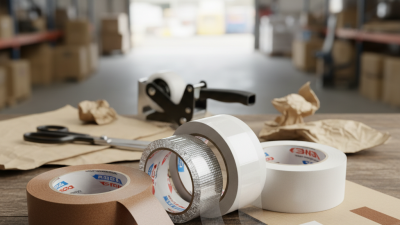
2026 Best Industrial Tape for Global Buyers?

Choosing the best industrial tape for a global operation is rarely as simple as comparing roll prices. A tape that bonds well to clean steel may lift from powder-coated panels, damp cartons, or textured plastic. Small differences matter. Temperature changes, surface condition, peel strength, and application speed can all affect performance on the production floor.

This 2026 guide helps buyers compare tape types against real working needs, from packaging and assembly to insulation and surface protection. It explains which details deserve attention: backing material, adhesive chemistry, thickness, service temperature, and supplier documentation. A technical data sheet is useful, but it cannot replace a trial on the actual substrate. That takes testing. Check adhesion after storage, temperature exposure, and handling—not just immediately after application. Even a careful shortlist can miss how a tape behaves on a line moving at full speed. That is worth admitting. Buyers should also compare sample availability, lead times, consistency between batches, and support for more than one market. No single product fits every plant or climate. The right choice balances reliable performance with practical sourcing, clear specifications, and a cost that holds up beyond the first order.
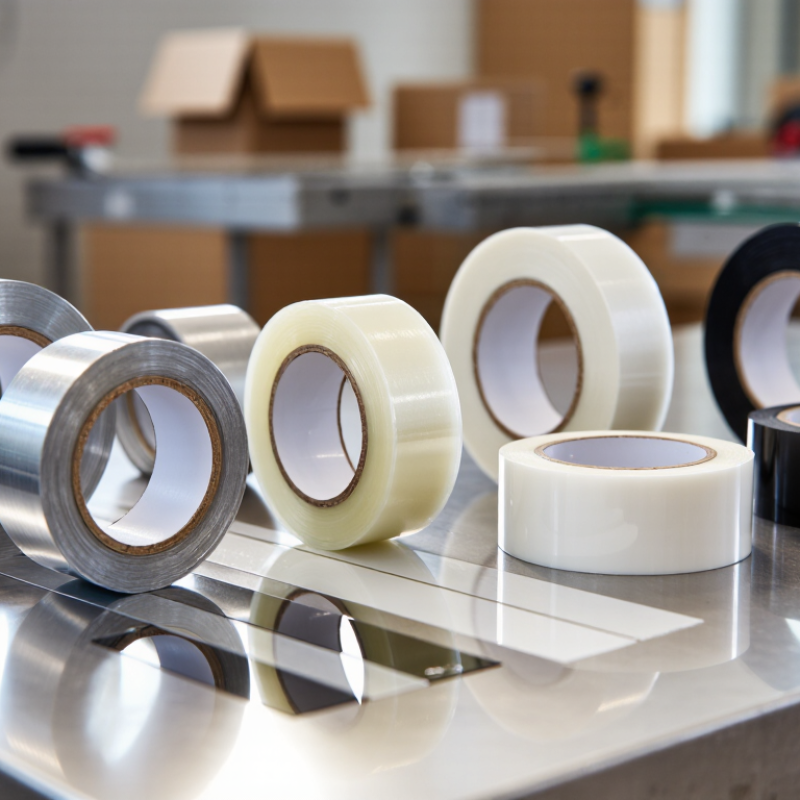
2026 Best Industrial Tape for Global Buyers?

Industrial Tape Basics: Backings, Adhesives, and Core Construction

Industrial tape is a construction, not just a sticky surface. The backing carries the load and affects flexibility, tear resistance, and how the tape handles around corners. Film backings can provide a smooth, consistent surface; cloth may conform more easily to uneven shapes; paper is often useful for masking and light-duty tasks. These are general tendencies, not guarantees. Coating weight and thickness matter, too.

The adhesive must match both the surface and the job. Acrylic formulations often suit outdoor exposure, while rubber-based adhesives can offer quick grab on many common materials; exact performance depends on the formulation. Silicone adhesives are used where heat resistance is important. Surface cleanliness changes results. Dust, oil, or condensation can weaken a bond, even when the tape seems suitable. Easy to overlook.

Core construction affects dispensing and converting. Buyers should check core diameter, roll width, winding quality, and whether the roll fits their equipment. A poorly wound roll can telescope or unwind unevenly. There is no universally best combination of backing, adhesive, and core. Test samples on the actual substrate, at the intended temperature, and after the expected dwell time. Specifications help, but a tidy datasheet may still miss a messy shop-floor condition.

Compare Tape Types by Use: Packaging, Masking, Electrical, and Bonding

Industrial tape selection starts with the job, not the roll width. For carton sealing, packaging tape should grip the box surface and resist handling during storage and transit. A dusty recycled carton may need a different adhesive than a clean, smooth box. The carton matters. Check adhesion after the box has been closed, especially if it will sit in a cold warehouse or humid container.

Masking tape is designed for temporary coverage during painting, finishing, or light assembly. Match its removal time and temperature limits to the work: tape left on a sun-warmed panel can leave residue or pull up a delicate coating. Test it first. A small trial patch is less costly than rework across a whole batch.

Electrical tape is used to insulate and protect electrical connections, but products vary in voltage, temperature, and flame-performance ratings. Verify the specification against the actual application; tape alone should not replace an appropriately designed connection.

Bonding tapes, including foam types, can join panels, trim, or signs while distributing load across a surface. They need compatible materials, clean contact areas, and enough pressure during application. This part is easy to underestimate. Dust, paint, and rough surface texture can weaken the bond, so test representative materials before ordering at scale.

Evaluate Performance with ASTM D3330’s 180° Peel-Adhesion Test

Industrial tape claims can look similar on a quote sheet. ASTM D3330/D3330M provides a standardized 180° peel-adhesion test for pressure-sensitive tapes. In Method A, tape is applied to a stainless-steel panel, then peeled back at a controlled angle. The measured force, commonly reported in N/25 mm, helps buyers compare samples under matched conditions. Small differences matter.

Record the panel condition, tape width, application pressure, dwell time, peel rate, and test temperature. ASTM’s method standardizes measurement; it does not set one universal pass value for every industrial use. A high peel result alone cannot prove suitability on painted steel, dusty cartons, or curved parts. Ask for the test method, average, individual results, and failure mode. Adhesive transfer and clean release tell different stories. One test is only a clue.

Tips: Request results from multiple production lots, not only a carefully selected sample. Compare tape on the actual substrate and after realistic conditioning. I would still treat a single peel number cautiously; it can miss performance changes caused by surface texture, temperature, or application pressure. Reference: ASTM International, ASTM D3330/D3330M, Standard Test Methods for Peel Adhesion of Pressure-Sensitive Tape.

2026 Best Industrial Tape for Global Buyers? - Evaluate Performance with ASTM D3330’s 180° Peel-Adhesion Test

Data status: The peel-adhesion figures below are illustrative screening ranges for common tape constructions, not certified test results or product-specific specifications. Actual results depend on the tape formulation, substrate, surface preparation, conditioning, dwell time, and test procedure. ASTM D3330/D3330M specifies test methods; it does not establish a universal pass/fail value for industrial tape.

Tape construction Typical backing and adhesive Illustrative 180° peel range Test reporting basis Common evaluation use Key factors affecting results
General-purpose packaging tape Biaxially oriented polypropylene (BOPP); acrylic or rubber-based pressure-sensitive adhesive 3–8 N/25 mm Force per 25 mm tape width, measured from a specified test panel using the applicable 180° peel procedure Comparing adhesion to a clean, smooth panel; not a direct measure of carton-sealing performance Adhesive chemistry, panel cleanliness, temperature, application pressure, and dwell time
Heavy-duty packaging tape BOPP or polyester backing; higher-coat-weight acrylic or rubber-based adhesive 5–12 N/25 mm Report the average peel force and identify the test method, panel, width, and conditioning Screening adhesion consistency where stronger initial bonding is required Backing stiffness, adhesive coat weight, application pressure, and test-panel surface condition
Masking tape Crepe paper backing; rubber-based or acrylic pressure-sensitive adhesive 2–7 N/25 mm Peel force from a stated panel under controlled test conditions Comparing adhesion and removal behavior; peel adhesion alone does not establish clean-removal performance Adhesive aging, dwell duration, surface energy, removal angle, and removal speed
Duct tape Polyethylene-coated cloth backing; commonly rubber-based adhesive 6–15 N/25 mm Average peel force normalized to the tested tape width Comparative screening for general adhesion to a smooth test panel Cloth construction, adhesive formulation, panel roughness, temperature, and application pressure
Double-sided tissue tape Thin tissue carrier; acrylic or rubber-based adhesive on both sides 5–15 N/25 mm State which adhesive face is tested and identify the panel used Comparing one-sided adhesion to a defined panel; bonding performance between actual materials needs separate testing Carrier stability, adhesive side, adherend surface, pressure, and dwell time
Double-sided foam tape Polyethylene, polyurethane, or acrylic foam carrier; pressure-sensitive adhesive on both sides 5–20 N/25 mm Report test setup and failure mode as well as peel force Screening adhesion; foam deformation and cohesive failure can affect the measured result Foam density and thickness, adhesive type, panel flatness, pressure, and test rate
Polyester electrical tape Polyester film backing; acrylic or rubber-based pressure-sensitive adhesive 2–6 N/25 mm Peel force from a stated test panel; electrical properties require separate tests Comparing adhesion behavior; peel results do not indicate dielectric or insulation performance Film thickness, adhesive formulation, surface cleanliness, and conditioning temperature
Aluminum foil tape Aluminum foil backing; commonly acrylic or rubber-based adhesive 4–12 N/25 mm Identify the panel and whether the foil backing deforms or tears during testing Comparative adhesion screening; application-specific sealing performance requires additional evaluation Foil thickness, adhesive coat weight, surface texture, pressure, and temperature

ASTM D3330 180° peel test checklist: Use the applicable current edition and method; document the test panel (commonly stainless steel for a controlled comparison), tape width, panel preparation, conditioning, application pressure, dwell time, peel rate, replicate count, average result, and failure mode. Compare results only when the test setup is equivalent. Confirm the exact method-specific requirements in the standard before conducting or reporting a compliance test.

Check Compliance: RoHS Directive 2011/65/EU and Market-Specific Requirements

For global buyers, industrial tape compliance starts with the complete product, not just its backing film. RoHS Directive 2011/65/EU restricts ten substances in electrical and electronic equipment. Its maximum concentration is generally 0.1% by weight in homogeneous materials, with a 0.01% limit for cadmium. These limits can apply to separate tape layers, including adhesive, liner, and coating. A compliant supplier declaration should identify the product and material scope; vague statements are hard to verify.

Testing matters. IEC 62321 provides methods for determining restricted substances in electrotechnical products and materials. A laboratory report should identify the sample, test method, and measured results—not simply state “RoHS compliant.” Requirements also vary by destination and use. EU REACH obligations, customer specifications, and local product rules may call for additional checks. A tape that passes one screening is not automatically suitable for every market.

Tips: Request current declarations and layer-specific test records. Match the report’s product code to the tape on your purchase order. Check adhesive changes after reformulation; this step is easy to miss. Keep batch records and retain samples where practical. Supplier paperwork helps, but it is not proof of every production batch. Verify the details before shipment.

Select Global Suppliers by Application Fit, Quality Controls, and Total Cost

Choosing an industrial tape starts with the joint, not a supplier’s catalogue. Identify the materials, surface texture, load direction, and exposure conditions. Fit comes first. A tape that bonds well to clean steel may struggle on powder-coated panels or textured plastic. Record application temperature, service temperature, humidity, and expected contact time. Test real parts. A clean test panel is not the factory floor; that gap is easy to underestimate.

Compare suppliers through measurable quality controls. Ask for documented batch traceability, consistent roll dimensions, storage guidance, and test data relevant to your application. Peel strength alone may not predict performance under sustained load, so consider shear and aging tests too. Small details matter. Request trial rolls and run them on the actual line, including routine handling and surface preparation. Then compare total cost: tape usage per assembly, rejects, labor, packaging, freight, lead time, and minimum order quantities. A lower unit price can disappear when rolls arrive late or create excess waste. Check whether suppliers can maintain specifications across repeat orders, and leave room for uncertainty: production conditions may reveal problems that a short trial misses.

2026 Best Industrial Tape for Global Buyers?

Select Global Suppliers by Application Fit, Quality Controls, and Total Cost

Example evaluation weights for comparing industrial tape suppliers—not market research or supplier ratings. Adjust them to match the application, including substrate, operating conditions, required quality documentation, and delivered cost.