Top 10 Paper Wrapping Tape Suppliers for Global Buyers
Global buyers need more than a long supplier list. They need dependable paper wrapping tape, consistent quality, clear specifications, and responsive communication. A tape roll may look simple, yet its adhesive strength, paper backing, unwind performance, and recyclability can affect every packed shipment.
Walter Soroka, a respected packaging educator and author, has said, “Packaging is a system, not merely a material.” That principle matters here. The right paper wrapping tape must match the carton surface, sealing method, storage climate, and handling conditions. A supplier may offer attractive prices, but weak adhesion can create open seams, damaged goods, and expensive returns. Small details matter.
This guide reviews ten suppliers serving international buyers. It considers product range, manufacturing capability, customization, quality control, export experience, and sustainability information. Some suppliers excel in printed tape. Others focus on reinforced paper tape, water-activated solutions, or high-volume orders. No ranking is flawless. Buyers should still request samples, technical data sheets, test reports, and recent production references.
Pay attention to practical evidence. Does the tape unwind smoothly on a busy packing line? Does it adhere to recycled corrugated boxes? Can the supplier maintain width, coating, and adhesive consistency across repeat orders? These questions often reveal more than a polished website.
The selected companies represent different strengths and operating models. Together, they provide a useful starting point for procurement teams seeking secure, efficient, and more responsible packaging choices.
What Paper Wrapping Tape Is and Where It Is Used
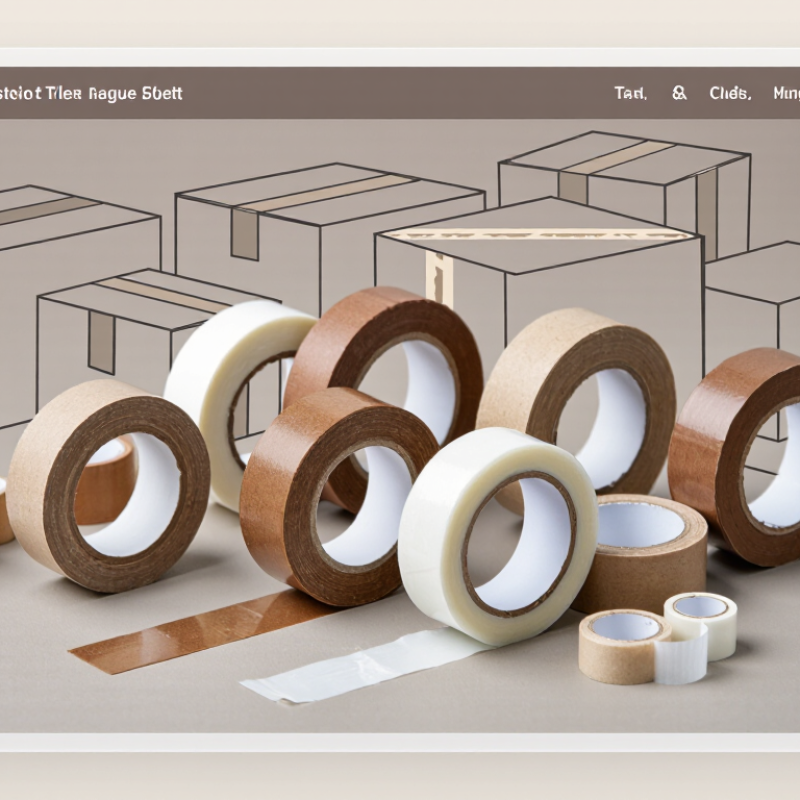
Paper wrapping tape is a narrow paper-based strip used to close, bundle, protect, or decorate packages. It may use pressure-sensitive adhesive or water-activated adhesive. Water-activated tape bonds firmly with corrugated cartons, leaving a visible seal. That detail matters for warehouses handling thousands of parcels daily.
Its uses extend beyond shipping boxes. Retailers apply it to gift wrapping, bakery cartons, garment bundles, document packs, and light industrial packaging. Smithers’ packaging research identifies e-commerce as a continuing demand driver for paper-based protective materials. The U.S. Environmental Protection Agency reported 67.4 million tons of paper and paperboard in municipal waste, with a 68.2% recycling rate in its latest national dataset. Paper tape can support fiber-based packaging systems, but adhesive contamination still deserves attention. The claim is not always simple.
Tips: Check tape width, tensile strength, roll length, and adhesive performance before ordering. Test it on recycled cartons, cold surfaces, and dusty boxes. A stronger tape is not automatically better. Moisture, storage temperature, and dispenser quality can change sealing results. Global buyers should request technical data sheets, batch information, and samples from potential suppliers. Packaging requirements vary widely.
How the Top 10 Global Suppliers Were Selected
Selecting ten global paper wrapping tape suppliers required more than online visibility. We reviewed manufacturing experience, adhesive expertise, export records, and practical buyer feedback. Each supplier had to show stable production, clear technical specifications, and repeatable quality controls. Sample rolls were considered where available, including tack, unwind behavior, edge adhesion, and clean application on kraft paper. These details matter during packing, especially when humidity changes.
We also examined converting capacity, minimum order quantities, lead times, packaging protection, and communication quality. A capable supplier should explain whether its tape suits manual packing, automated lines, or irregular carton surfaces. Documentation was another filter. We looked for accessible test reports, material information, quality certificates, and responsible claims that could be checked. Vague promises reduced confidence. Some records were incomplete. That matters.
The final list reflects a practical balance between product performance, supply reliability, and international service readiness. We did not treat company size as proof of quality. Smaller manufacturers may offer sharper customization, while larger operations may provide stronger continuity. However, every assessment has limits because samples, market conditions, and customer requirements differ. Buyers should retest tape in their own warehouse before placing large orders, particularly where temperature, dust, or high-speed sealing affects results. This method favors evidence over publicity, but it remains open to revision as new data emerges.
Top 10 Paper Wrapping Tape Suppliers for Global Buyers – How the Top 10 Global Suppliers Were Selected
| Rank |
Anonymous Supplier |
Primary Supply Region |
Paper Tape Category |
Adhesive Technology |
Typical Width Range |
Typical Roll Length |
FSC-Certified Paper Availability |
Customization Capability |
Typical MOQ |
Indicative Export Lead Time |
Evaluation Score |
| 1 |
Supplier 01 |
Western Europe |
Reinforced kraft paper tape |
Water-activated starch adhesive |
48–100 mm |
50–200 m |
Available |
Printing, width, length, core size |
1 pallet |
4–7 weeks |
92/100 |
| 2 |
Supplier 02 |
East Asia |
Self-adhesive kraft paper tape |
Natural rubber or synthetic rubber adhesive |
25–100 mm |
25–180 m |
Upon request |
Private labeling, artwork, adhesive grade |
500 cartons |
5–8 weeks |
90/100 |
| 3 |
Supplier 03 |
North America |
Water-activated reinforced tape |
Dextrin-based adhesive |
50–100 mm |
100–150 m |
Available |
Custom print, reinforcement pattern, carton sealing grade |
1 mixed pallet |
6–9 weeks |
88/100 |
| 4 |
Supplier 04 |
Central Europe |
Lightweight paper packaging tape |
Hot-melt synthetic adhesive |
38–75 mm |
50–150 m |
Available |
Width, roll length, core diameter |
300 cartons |
4–6 weeks |
87/100 |
| 5 |
Supplier 05 |
South Asia |
Brown kraft paper adhesive tape |
Pressure-sensitive acrylic adhesive |
24–96 mm |
25–100 m |
Upon request |
Custom color, logo printing, packaging format |
1,000 cartons |
5–8 weeks |
84/100 |
| 6 |
Supplier 06 |
Southeast Asia |
Reinforced gummed paper tape |
Water-activated modified starch adhesive |
48–70 mm |
50–150 m |
Available |
Reinforcement density, printing, roll size |
1 container or mixed pallet |
6–10 weeks |
82/100 |
| 7 |
Supplier 07 |
Southern Europe |
Decorative and branded paper tape |
Water-based acrylic adhesive |
15–75 mm |
10–100 m |
Available |
Full-color printing, die-cutting, retail packaging |
200 cartons |
5–7 weeks |
80/100 |
| 8 |
Supplier 08 |
East Asia |
High-performance kraft carton-sealing tape |
Solvent-free acrylic adhesive |
38–100 mm |
50–180 m |
Upon request |
Adhesion level, paper color, print design |
500 cartons |
5–9 weeks |
79/100 |
| 9 |
Supplier 09 |
Eastern Europe |
Recyclable paper packaging tape |
Water-based adhesive |
25–75 mm |
50–100 m |
Available |
Width, core diameter, paper weight |
1 mixed pallet |
6–8 weeks |
77/100 |
| 10 |
Supplier 10 |
Latin America |
General-purpose kraft paper tape |
Pressure-sensitive rubber adhesive |
24–72 mm |
25–100 m |
Upon request |
Basic printing, width, roll length |
1,000 cartons |
7–10 weeks |
74/100 |
Selection methodology: Suppliers were compared using product availability, adhesive performance, paper sustainability options, customization capability, minimum order quantity, export lead time, quality-system documentation, and suitability for international packaging applications. Lead times and order quantities are indicative ranges and should be confirmed directly before purchasing.
Profiles of the Top 10 Paper Wrapping Tape Suppliers
The top ten paper wrapping tape suppliers differ in equipment, adhesive control, and export experience. The first supplier serves retail packers with recycled kraft tape and small minimum orders. The second focuses on reinforced paper tape for heavier cartons. The third offers custom printing, with color matching and barcode testing before production. The fourth supplies water-activated tape for fulfillment centers and automated sealing lines. Its machine compatibility requires careful checking.
The fifth supplier is known for narrow-width tape used in gift wrapping and stationery. The sixth provides grease-resistant paper tape for food-related outer packaging, supported by material declarations. The seventh handles large-volume orders through coated-paper production and slitting equipment. Buyers should request recent batch samples. The eighth supplier supports private-label packaging with flexible core sizes and carton designs. Its lead times may change during seasonal demand. The ninth emphasizes solvent-free adhesive systems and provides technical data sheets for adhesion, peel strength, and temperature resistance. Documentation matters more than attractive claims. The tenth supplier specializes in export packing, offering moisture-resistant cartons and pallet protection for long-distance shipping.
A practical review should examine sample consistency, roll length, edge quality, and adhesive transfer. Small details matter. Ask for production photos, inspection records, and clear incoterms. Some suppliers look competitive until freight, tooling, and rework costs appear. I have seen buyers overlook humidity testing, especially when tape travels through tropical ports. That mistake is avoidable, but not always avoided. Performance also depends on the carton surface, storage temperature, and application pressure. Suppliers with strong profiles explain these limits instead of promising universal results.
Comparing Product Quality, Customization, Pricing, and Delivery
Global buyers should compare paper wrapping tape suppliers through measurable performance, not attractive catalogs. Smithers’ 2024 packaging outlook values the global packaging market at more than US$1 trillion, increasing pressure on suppliers to deliver consistent, scalable materials. Ask for tensile strength, adhesion, moisture resistance, and aging results. ASTM D5486 testing can support credible carton-sealing claims, although laboratory performance may differ in cold warehouses. Test samples at 5°C and 23°C.
Quality is only one part. Customization should cover tape width, roll length, kraft shade, recycled content, core size, and water-based printing. A practical trial might use 48-millimeter rolls on uneven recycled cartons, where weak adhesive becomes obvious. Low minimum order quantities help smaller buyers, but usually increase unit pricing. Check the full landed cost, including plates, cores, freight, and rejected rolls. Numbers can mislead.
Pricing should be compared per sealed carton, not per roll. The International Trade Centre reports that transport and delivery conditions strongly affect cross-border purchasing decisions, making lead-time transparency essential. Request production time, inspection timing, export documents, and a delivery buffer of at least seven days. Suppliers offering 95% on-time delivery may still fail during peak seasons. That point deserves skepticism. A written quality agreement, retained samples, and batch-level traceability provide stronger reliability than promises alone.
Top 10 Paper Wrapping Tape Suppliers for Global Buyers
This anonymized benchmark compares supplier performance across product quality, customization capability, price competitiveness, and delivery reliability. Scores are normalized on a 10-point scale; a higher price score indicates more competitive pricing. The comparison is intended to support initial sourcing evaluation and should be validated with samples, quotations, and production audits.
How Global Buyers Can Choose the Right Supplier
Top 10 Paper Wrapping Tape Suppliers for Global Buyers
How Global Buyers Can Choose the Right Supplier
Choosing among ten paper wrapping tape suppliers requires more than comparing unit prices. Check the tape’s paper grade, adhesive strength, roll length, core size, and carton protection. A reliable supplier should provide clear technical data and recent test reports. Samples come first. Test them on your actual cartons, especially in humid storage rooms or during long-distance transport.
Ask how the supplier controls coating weight, curing time, and winding tension. These details affect tearing, edge lifting, and application speed. Request production samples from different batches, not only one attractive roll. Numbers expose gaps. Compare minimum order quantities, lead times, replacement policies, and packaging photos. A supplier with fast replies but vague specifications may create expensive delays later.
Experience also matters during factory evaluation. Review quality records, equipment maintenance, export experience, and staff responses to technical questions. Check whether the supplier can adjust width, color, printing, or adhesive performance without weakening consistency. Environmental claims need evidence, such as material declarations and suitable certification documents. Be careful with impressive promises. I have found that low prices often hide thicker cores, shorter rolls, or unstable adhesion. Buyers should record every requirement in a written specification before approving mass production. Even then, the process is not perfect; seasonal humidity, transport pressure, and operator technique can still change results.